
Car Accident Injury Symptoms in Phoenix & Mesa, AZ
Felt fine right after the crash, but now something is off? Most accident injuries don’t show up for 24 to 72 hours. Here is what to watch for and why waiting makes it worse.

Why You Felt Fine Right After the Car Crash.
And Why That Doesn’t Mean You Weren’t Injured

This is the most important thing I tell every patient who comes in, saying, “I felt okay at first.”
When your body goes through a car accident, it immediately releases adrenaline and cortisol, stress hormones that suppress pain and inflammation so you can respond to an emergency.
In the minutes and hours after a crash, these hormones are doing exactly what they are designed to do.
They mask pain. They make you feel functional. And they wear off.
As adrenaline fades over the next 24 to 72 hours, the real picture starts to emerge.
Micro-tears in muscles, ligaments, and discs begin to swell. Immune cells flood the injured area. Irritated nerves start firing.
What felt like “just a little stiff” on the night of the accident becomes serious neck pain, headaches, or numbness in the arms by day two or three.
This is not unusual; it is biology. But it creates a real problem for patients who wait to see a doctor, because that gap in treatment becomes a gap in your medical record.
And insurance companies use that gap as evidence that your injuries were not serious.
If you were in an accident, get evaluated within 24 to 48 hours, even if you feel okay. Call or text (602) 632-0000.
Symptoms That Appear Immediately
Do Not Dismiss These
Some symptoms show up within minutes or hours of the accident.
These should be treated as urgent.
Neck and upper back pain or stiffness
Pain, heaviness, or difficulty turning your head immediately after impact often indicates whiplash, a rapid back-and-forth motion that strains the muscles, ligaments, and facet joints of the cervical spine. Do not assume this will resolve on its own.
Headache starting at the base of the skull
Headaches appearing within hours of a crash can signal cervicogenic injury from neck trauma, concussion, or in serious cases, intracranial bleeding. A headache that worsens rather than improves is a red flag.
Dizziness and nausea
Feeling unsteady, lightheaded, or nauseated after a crash can indicate concussion, vestibular system disturbance from whiplash, or brain injury. Do not drive yourself to the ER if you are experiencing these.
Numbness, tingling, or burning in the arms, hands, legs, or feet
Pins-and-needles sensations immediately after impact suggest nerve or spinal involvement. This can indicate disc herniation, nerve compression, or spinal cord compromise, all of which are time-sensitive injuries.
Chest or abdominal pain with bruising
Seatbelt-related bruising across the chest or abdomen with pain, swelling, or nausea can indicate internal injury. This requires emergency evaluation, not a wait-and-see approach.
Seek emergency care immediately if you experience:
Severe worsening headache, confusion, loss of consciousness, weakness or inability to move fingers or toes, loss of bladder or bowel control, or severe abdominal pain with lightheadedness.
Delayed Symptoms
What Shows Up 24 to 72 Hours After Your Accident

Most patients who come to The Accident Doctors in the days after an accident are dealing with symptoms that were not there, or barely noticeable, on the day of the crash. This is normal. It is also the most important window for getting evaluated.
Here are the most common delayed-onset symptoms and what they mean clinically.
Whiplash and Neck Symptoms (12 to 72 Hours)
As adrenaline clears and inflammation builds, whiplash presents as increasing neck stiffness, reduced range of motion, headaches radiating from the base of the skull, shoulder pain, and sometimes arm tingling or numbness.
Fatigue, blurred vision, and difficulty concentrating are also common in the first week.
Whiplash that is not evaluated and documented early frequently becomes chronic neck pain. The window for effective early intervention closes faster than most patients realize.
Lower Back Pain (24 Hours to One Week)
The sudden compression and flexion of a collision strains lumbar muscles and ligaments, can injure facet joints, and may herniate discs that then press on spinal nerves. Lower back pain that appears a day or two after an accident, particularly if it radiates into one or both legs, is not a pulled muscle. It is a clinical presentation that needs evaluation, imaging, and documented treatment.
Headaches (Same Day to 10 Days)
Post-accident headaches can come from three sources: neck soft-tissue injury, concussion or traumatic brain injury, or rarely, intracranial bleeding. Headaches that are persistent, worsening, or accompanied by confusion, sensitivity to light or sound, or cognitive problems need immediate physician evaluation, not ibuprofen and rest.
Numbness and Tingling (Days to Weeks Later)
Numbness, tingling, or pins-and-needles sensations that develop in the days after an accident are caused by nerves being compressed or irritated by swollen soft tissues or herniated disc material. These symptoms are among the most time-sensitive on this list, persistent nerve compression can cause permanent damage if not addressed.
Stomach and Abdominal Pain (Hours to Days)
Abdominal pain, bloating, nausea, or a general “something is wrong” feeling in the stomach after an accident can indicate internal bleeding, organ injury, or seatbelt-related trauma to the abdominal wall. This symptom is widely under-recognized and frequently dismissed. If you have any abdominal discomfort after a crash, especially with bruising across the midsection, get evaluated the same day.
Insomnia and Sleep Disruption (Days to Weeks)
Difficulty falling asleep, staying asleep, or waking from nightmares after an accident is not simply stress. It is a recognized symptom of post-concussive syndrome and PTSD that develops in the days and weeks following trauma. Pain and physical discomfort compound the problem. Left untreated, post-accident insomnia becomes a chronic driver of poor recovery and mental health decline.
Driving Anxiety, Flashbacks, and Emotional Changes (Weeks)
Fear of driving, intrusive memories of the crash, heightened startle response, irritability, and avoidance of roads or intersections where the accident happened are PTSD-type symptoms that often emerge weeks after the initial trauma. These are legitimate medical symptoms with a documented link to the accident, not a personal weakness or overreaction. Early documentation of psychological symptoms is important for both treatment and your insurance claim.
Symptoms People Dismiss
That Are Often More Serious Than They Seem

“Just a headache.”
It could be a concussion, traumatic brain injury, or intracranial bleeding, especially if worsening, persistent, or accompanied by confusion or vomiting.
“A little neck stiffness.”
Frequently indicates significant soft tissue, joint, or nerve injury when it persists beyond a few days or radiates into the shoulders or arms.
“Sore back, probably just a pulled muscle.”
Can signal disc herniation, spinal instability, or nerve compression, particularly if it radiates, causes leg weakness, or limits movement.
“Occasional tingling in my hand.”
Intermittent numbness and tingling may indicate pinched nerves or spinal cord involvement. This symptom category is highly time-sensitive.
“Tired and foggy… probably just stress.”
When combined with headaches and concentration problems, fatigue and mental fog are post-concussive red flags, not ordinary tiredness.
“Trouble sleeping, I’m just anxious.”
Persistent insomnia and anxiety after an accident are core PTSD and post-concussive symptoms. They are connected to the crash, not just general life stress.
The rule of thumb:
If a symptom is getting worse instead of better, or has not improved after a few days, it needs to be evaluated by a physician, not waited out.
How Your Symptoms Affect Your Insurance Claim
What Most Patients Don’t Know
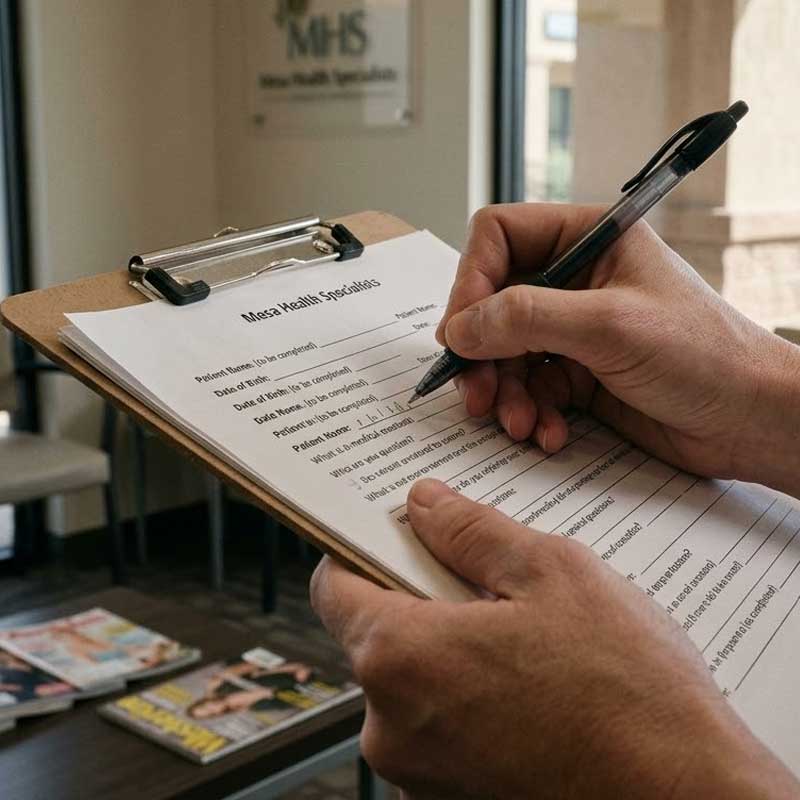
Every day you wait to see a doctor after an accident, the insurance company’s case against your claim gets stronger.
Here is why. Insurance adjusters are trained to look for gaps in treatment as evidence that you were not seriously injured, or that something other than the accident caused your pain.
If your symptoms appeared two days after the crash but you did not see a doctor for two weeks, you will be asked to explain the gap.
In many cases, delayed treatment leads to reduced settlements or outright claim denial.
This is true even when delayed symptoms are completely normal and medically expected after an accident.
The biology is on your side. The paperwork may not be.
Getting evaluated at The Accident Doctors within 24 to 48 hours of your accident creates an objective medical record that links your symptoms to the crash, documents the clinical findings, and establishes a treatment timeline that supports your claim.
Arizona’s statute of limitations for personal injury claims is two years from the date of the accident. Do not let a documentation gap cost you your recovery.
Symptom FAQs
Questions Phoenix and Mesa Accident Patients Ask Most
What Patients Say About The Accident Doctors in Phoenix & Mesa
Are You Experiencing These Symptoms
After a Car Accident?
- Neck pain, stiffness, or reduced range of motion.
- Headache, especially at the base of the skull.
- Lower back pain or stiffness Numbness, tingling, or burning in arms, hands, legs, or feet.
- Shoulder pain or arm weakness
- Dizziness or feeling unsteady
- Fatigue or mental fog
- Abdominal pain or discomfort
- Difficulty sleeping or waking from nightmares
- Anxiety about driving or returning to the accident location
- Pain that started days after the crash
You do not need all of these symptoms to come in. One is enough.
Not Sure If Your Symptoms Are Serious?
Call Us and We Will Tell You Honestly.
Dr. Nguyen sees accident patients within 24 hours at our Mesa and Phoenix clinics.
If your symptoms do not require treatment, we will tell you.
If they do, we will document and treat them at $0 out-of-pocket through the medical lien model.
Mesa Clinic (walk-ins welcome): 1155 S Country Club Dr., Mesa, AZ 85210
Phoenix Clinic (by appointment): 4338 W Thomas Rd, #117, Phoenix, AZ 85031
Hours: Monday through Friday 9am to 5pm | Saturday and Sunday by appointment
Contact Us Today
Give us a text or call:
(602) 632-0000
Business Hours
Mon – Fri: 9:00 am – 5:00 pm
Sat – Sun: Appointment Only
Let’s Get Social


Mesa Clinic
1155 S Country Club Dr.
Mesa, AZ 85210
(Northeast corner of Country Club and Southern)
Phoenix Clinic
4338 W Thomas Rd, #117
Phoenix, AZ 85031
(Northwest corner of Thomas and 43rd Avenue – inside the Family Practice office)